You're Not Dramatic, Estrogen Is Just Busy
…and it’s effecting your brain, gut, ovaries, and pretty much everything else
Estrogen, or the primary female sex hormone, can have an affect on mood, hunger, the gut, bones, the heart, and even the skin. Estrogen levels are fluctuating and having a direct impact on your body throughout your cycle.
If you've ever wondered why you feel like a different person depending on the week, estrogen is a big part of the answer.
How Estrogen Actually Moves Through Your Cycle
Estrogen rises and falls in a pretty predictable pattern every cycle.
In the follicular phase (the first half of your cycle), estrogen slowly climbs as a follicle matures in your ovary. It builds to a sharp peak right before ovulation, which is actually what triggers the LH surge that causes you to ovulate, or release an egg.
After ovulation, estrogen dips briefly, then rises again with a smaller secondary peak in the mid luteal phase, alongside progesterone, which is now being produced by the corpus luteum.
If you don’t end up getting pregnant, then in the late luteal phase, the week or so before your period, both hormones drop pretty drastically. That drop is where some women will experience “PMS”.
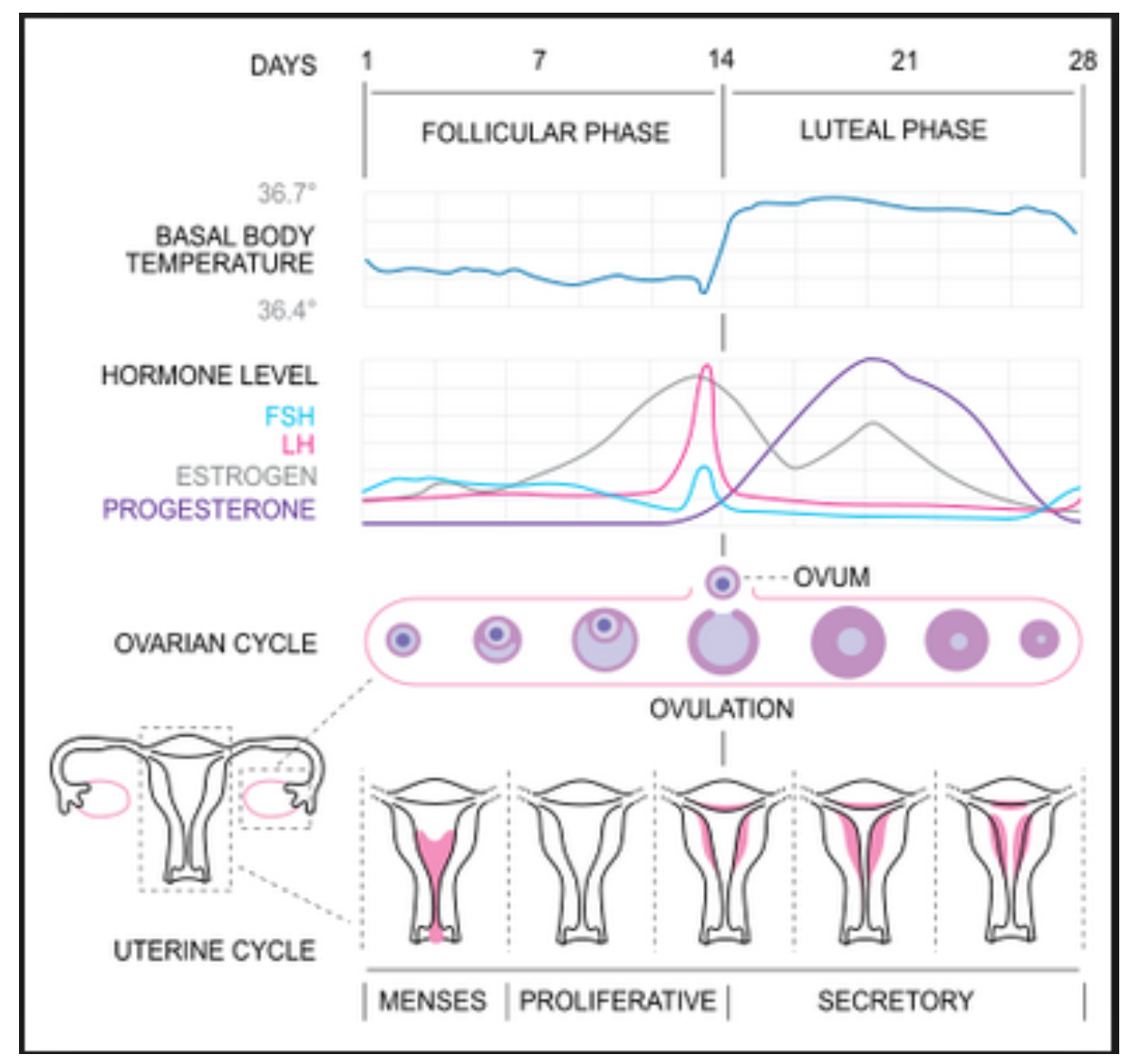
Menstrual cycle diagram by Isometrik, Wikimedia Commons , licensed under CC BY-SA 3.0 .
The Late Luteal Crash: Mood, Hunger, and Your Brain
When estrogen falls in the late luteal phase, your brain feels it directly. Estrogen normally supports the enzyme your brain uses to make serotonin, so as estrogen declines before your period, serotonin activity can decline with it, contributing to irritability, low mood, anxiety, and emotional sensitivity.
Progesterone's drop matters here too. Its metabolite, allopregnanolone, has a calming effect on the brain through GABA (your main calm down neurotransmitter). When that metabolite withdraws quickly right before your period, it changes GABA signaling in a way that can heighten anxiety, irritability, mood swings, and poor sleep in sensitive people.
This is your brain responding to a real chemical shift, not a character flaw, not "just hormones" in the dismissive sense. It's a legitimate neurochemical event.
So, what should we do?!
Well, estrogen also has a direct impact on insulin sensitivity, or how effectively your cells can uptake glucose. Ensuring stable blood sugar can be a real game changer. Usually during this time, women will experience intense cravings for sugar (chocolate), refined carbs (pasta, pizza, bread) resulting from a cascade of estrogen fluctuation. Unfortunately, the refined carbs, sugar, and the candy can cause blood sugar spikes that drop just as fast, perpetuating the mood and hunger symptoms.
Instead:
Lean on complex carbohydrates. Sweet potatoes, oats, whole grains, beans. They release energy slowly, which helps keep mood and cravings more stable, and studies have shown whole grains in place of refined grains can meaningfully reduce PMS symptoms.
Increase fiber. It slows digestion, stabilizes blood sugar, and feeds your gut bacteria, which matters more than you'd guess, because your gut microbiome actually helps regulate how much active estrogen is circulating in your body in the first place. This "estrobolome" system uses an enzyme called beta glucuronidase to reactivate estrogen that would otherwise be excreted, which is part of why gut health and hormonal health are so tightly linked.
Add fermented foods to support that same gut ecosystem.
Protect your rest. This is the week to prioritize sleep, gentle movement like yoga or Pilates, and genuine self care. This is not indulgent; your nervous system is doing more work than usual.
Wait, Is This What Perimenopause Feels Like?
Kind of, and it's a useful way to think about it, with one caveat.
The late luteal phase is a temporary dip in estrogen that resolves once your period starts and the next cycle begins. Perimenopause is a longer and more sustained decline in estrogen with more erratic swings along the way. They're not identical, but they share the same underlying driver, falling estrogen, which is why some of the same symptoms show up in both: mood changes, sleep disruption, and the other shifts. If you're in perimenopause, you may be feeling a version of "late luteal phase" symptoms more often, layered on top of the normal ups and downs of whatever cycle you still have. That's worth naming, because it means the tools that help in the late luteal phase (blood sugar stability, gut support, rest) tend to help in perimenopause too.
Estrogen and Where Your Body Stores Fat
Estrogen has a direct relationship with insulin sensitivity and fat storage. During the reproductive years, estrogen tends to favor storing fat in the hips, thighs, and butt as subcutaneous fat. As estrogen declines, women may start to notice “central adiposity,” or fat storage shifting toward the abdomen. This visceral fat sits around our organs and is metabolically active, also secreting estrogen, so your body tries to cling on to it tightly.
This effect is best documented over the longer estrogen decline of perimenopause and menopause rather than the week to week dip of a single cycle, but the same blood sugar stabilizing habits above are protective here too.
If you've noticed the number on the scale creeping up around midlife with no real change to your diet or workouts, it's not a discipline problem. It's hormonal, and it's real.
The Estrogen and Histamine Loop
This one is genuinely fascinating.
Estrogen and histamine influence each other in both directions. Estrogen receptors sit directly on mast cells, the cells that store and release histamine, and when estrogen binds to those receptors, it increases mast cell degranulation, meaning more histamine gets released. Histamine, in turn, can stimulate the ovaries to produce more estrogen. It's a loop.
Progesterone works against this. It acts as a natural brake on mast cell activity, so when progesterone drops, which tends to happen earlier than estrogen in the hormonal shifts of perimenopause, that protective brake weakens, and histamine symptoms can show up more easily.
This is why some women in perimenopause suddenly develop hives, itchy skin, or allergy type symptoms out of nowhere.
I can speak to this personally. After my second baby, I started breaking out in hives and itchy skin out of nowhere. I didn't understand it at first. Then it clicked, my hormones were still resettling after pregnancy, and I was essentially living through a mini version of that same estrogen progesterone shift. I noticed my flare ups tracked with my late luteal phase, and sometimes with other hormonal fluctuations across my cycle. Once I understood it was an estrogen and histamine issue and not some mystery allergy, I was able to focus my energy on hormone management as a root cause.
If you’re unsure whether any symptoms are correlating with your cycle, track your symptoms against your cycle for a month or two. The pattern usually shows up fast once you're looking for it.
Estrogen, Your Bones, and Your Heart
The bones.
Estrogen isn't just protective for bone, it's actively doing two jobs at once. It slows down the cells that break down old bone (osteoclasts) and encourages the cells that build new bone (osteoblasts). That's why bone loss accelerates once estrogen drops in perimenopause and menopause.
The good news: this is one of the more actionable pieces. Weight bearing stress on bone directly stimulates osteoblasts to build new bone, which is exactly why strength training in your 20s and 30s matters so much, and why it's never too late to start if you're older. Pair that with magnesium, vitamin D, and calcium rich foods.
The heart.
Estrogen also supports your cardiovascular system as it shifts your cholesterol profile toward more HDL and less LDL. Estrogen also helps your blood vessels produce nitric oxide, which relaxes and widens them, supporting healthy blood flow and blood pressure.
Skin and Tissue
Estrogen has a relationship with skin as well. It supports collagen production, keeps skin hydrated, and helps maintain that plump, firm, elastic quality associated with youthful skin. It plays a similar role in vaginal tissue, helping keep it thick, elastic, and well lubricated.
As estrogen declines in perimenopause, that support starts to fall away. Collagen production slows which can show up as thinner and less elastic skin, more visible sagging, and slower wound healing.
The same decline affects vaginal tissue. As estrogen drops, the vaginal walls can become thinner, drier, and less elastic. This often shows up as dryness, itching, irritation, and pain during sex. It's incredibly common, and it's not something you have to just accept or push through quietly. There are ways to manage these symptoms.
Knowledge Is Power
Estrogen does so much for the body that when it shifts, it can genuinely feel disorienting especially if you don’t understand the underlying mechanisms. My hope is that this gives you a better idea of what is going on in your body and why. So, when your mood dips, your cravings hit, or you start noticing more fat around your belly, you are empowered in knowing you’re not alone and there are ways to feel better and be proactive.
My goal is to empower you and ensure you're prepared as your body moves through these shifts.
As a note, I did not dive deep into other hormones that also play large roles in all of the above, but stay tuned for more on that later.
If you want to dig into your own hormonal picture, symptoms, or cycle, I'd love to help.
Schedule your free 30 minute discovery call, and let's figure it out together.
References
Bonds, R. S., & Midoro-Horiuti, T. (2013). Estrogen effects in allergy and asthma. Current Opinion in Allergy and Clinical Immunology, 13(1), 92–99.
Brincat, M. P. (2004). Oestrogens and the skin. Journal of Cosmetic Dermatology, 3(1), 41–49.
Diet, the Gut Microbiome, and Estrogen Physiology: A Review in Menopausal Health and Interventions. (2025). PMC.
Epperson, C. N., et al. (2002). Cortical γ-aminobutyric acid levels across the menstrual cycle in healthy women and those with premenstrual dysphoric disorder. Archives of General Psychiatry, 59(9), 851–858.
Genitourinary Syndrome of Menopause. Frontiers in Reproductive Health.
Gong, M., Wilson, M., Kelly, T., et al. (2003). HDL-associated estradiol stimulates endothelial NO synthase and vasodilation in an SR-BI–dependent manner. Journal of Clinical Investigation, 111(10), 1579–1587.
Increased visceral fat and decreased energy expenditure during the menopausal transition. PMC.
Menstrual cycle hormonal fluctuations and their associations with athletic performance and injury susceptibility in female athletes. (2025). PMC.
Plottel, C. S., & Blaser, M. J. (2011). Microbiome and malignancy. Cell Host & Microbe, 10(4), 324–335.
Raine-Fenning, N. J., Brincat, M. P., & Muscat-Baron, Y. (2003). Skin aging and menopause. American Journal of Clinical Dermatology, 4(6), 371–378.
Simpson, E. R., Wang, X., & Brown, K. A. (2015). Aromatase overexpression in dysfunctional adipose tissue links obesity to postmenopausal breast cancer. Monash University research review.
